



Absence of discord or conflict is not equal to the presence of peace. Peace is when there is a gentle equilibrium of all forces concerned, a dynamic harmony…it does not mean status quo or a static condition at all…
Lady Shri Ram College has today an established reputation that strives for excellence in its academic, extra-curricular and community outreach activities. A rich calendar of symposia, seminars, workshops and cultural events informs its working ethos. Much of the intellectual and academic activities organized by the College move beyond the narrow confines of the curricula and embraces a wide range of creative and artistic tools in addition to literary and academic tools. The college set up a dedicated Learning, Research and Resource Centre by financial assistance provided by the UGC in 2005 towards this end.
In the year 2005, Dr. Meenakshi Gopinath, the then principal of Lady Shri Ram College, a pioneer in the field of Conflict Transformation and Peace building laid the foundations of a UGC approved post-graduate diploma which would be offered at the Learning, Research and Resource Centre. The course titled Conflict Transformation and Peace Building is recognized by the University of Delhi with the mandated approvals from the Academic Council of the University. On the golden anniversary of the College in 2006, it was decided that Confluence the Learning, Research and Resource Centre when completed would be named after the best known and cherished of our alums Daw Aung San Suu Kyi. This combined with our pioneering role in bringing the discipline of Conflict Transformation and Peace Building into the University of Delhi, made the choice of naming the Learning Centre in her honour fairly obvious, given that she is a great warrior of peace.
The gracious and beautiful building of the Aung San Suu Kyi Centre for Peace was inaugurated by His Holiness The Dalai Lama in 2013. It began to function formally from its new premises from August 11th, 2014. It is dedicated to fostering a culture of peace in the South Asian region, a peace that transcends narrow nation-states and boundaries and embraces the essentially interconnected nature of rights and freedoms.
The Centre aims to achieve the following:
- Create a context for collective learning, moving beyond the rigours of the prescribed syllabus and examinations.
- Help students gain opportunities for leadership training that is distinctive in being socially aware and responsible.
- Be the nerve centre of all vibrant research, teaching and publication activities within college.
- Build bridges with like-minded scholars, activists and performers all over the world.
One year Diploma programme in Conflict Transformation and Peacebuilding (CTPB)
Conflict Transformation is a newly emerging, expanding and innovative discipline that is opening new frontiers of knowledge. The growing realization that the world has not yet effectively devised systems to cope with intra and inter-national conflicts has led civil society to search for creative options that place ‘people’ at the centre of peace processes. It is in this context that the field of Conflict Transformation has been conceptualized. This course seeks to address a growing need for education on the paradigms, models and skills that can assist societies to transform conflicts non-violently.
The Diploma Course is a one year integrated programme. It is offered to undergraduate and graduate students, NGO workers, media persons and grassroots workers. Drawing on resources from sociology, political science, media studies and psychology, the course uses an interdisciplinary approach. It is interactive, combining lectures, case studies, panel and group discussions, seminars, role-playing, field trips, film screenings and interactions with senior practitioners and scholars.
The faculty comprises erudite academicians at LSR and various reputed Universities as well as educators who have worked in conflict regions. To create an interactive space for the building of a network of young people committed to non-violent social change, the aim is to set up at LSR a quality Learning Centre that engages in research and praxis in education for a Culture of Peace.
CTPB Highlights 2024-25
The CTPB course started after a rigorous screening and interview process selecting 33 students. On 12 September 2024, the course had its orientation lecture with Dr. Shweta Singh as a keynote speaker. Dr. Singh is an Assistant Professor & Assistant Dean of Students, in the Department of International Relations at South Asian University. Having nurtured and taught this course in the formative years, she gave a bird’s eye view of the entire syllabus to the new batch of students. She especially emphasized the paradigm shift that the field of Conflict Transformation presents, particularly in terms of how the next generation of leaders can be empowered to prioritize coexistence and nonviolent social changes. She also focused on the changing nature of conflict and how there is a shift from inter to intrawar.
The talk included a generic introduction to Conflict Analysis, highlighting a range of interdisciplinary theories as well as the role of gender in contemporary conflict analysis. There was a special online lecture conducted by Prof. Ummu Salma Bava on ‘European Union and Peace-Building’ on 12th April 2025. Prof. Bava is Chairperson & Jean Monnet Chair, Centre for European Studies, SIS, JNU and Mercator Fellow, Bundesverdienstkreuz, Germany. The talk focused on how the European Union has emerged as one of the largest peace projects in the post-Cold War era.
Later in the month of April, a panel discussion was held on India’s Evolving Security Strategy in a Turbulent Geopolitical Landscape by the ASSK Centre in collaboration with the Department of Political Science. India’s security strategy is undergoing a significant evolution amid a volatile global order characterized by escalating multipolarity, intensifying strategic competition, and disruptive technological advancements.
The discussion centered around India’s pursuit of self-reliance in defence production, its active engagement in multilateral forums, and its strategic balancing act in a world increasingly defined by great power competition, particularly in the Indo-Pacific region, while safeguarding its core national interests and contributing to regional stability. The panelists included Dr. Happymon Jacob, Associate Professor of Diplomacy and Disarmament Studies, SIS JNU, and Dr. Roshan Khanijo, Director of the Centre for Land Warfare Studies (CLAWS), New Delhi.
After completion of coursework in the first semester, students worked on their respective dissertation topics relating to different dimensions of conflict transformation under the able supervision of faculty from across the fields along with CTPB faculty members. Their research work is constantly enriched by students’ internship associations with different organizations working in the field of conflict transformation and peace-building.
The Programme seeks to accomplish the following:
- Gain an understanding of the basic nature and challenges of contemporary conflicts;
- Familiarize students with theoretical under-standings of the related fields of Conflict Transformation, Conflict Prevention, Conflict Management, Conflict Resolution and Peacebuilding;
- Develop capacities and skills for responding to social conflicts (for example, dialogue, active listening, facilitation, mediation and negotiation);
- Foreground the lens of gender in the analysis of conflict and in the conceptualization of peace initiatives;
- Facilitate an in-depth knowledge about peacebuilding approaches in diverse conflict regions;
- Create an interactive space for the building of a network of young people committed to constructive social change;
- Build a synergy between the theory and practice of Conflict Transformation, Human Security and Development.
The Diploma Programme requires students to:
- Complete course work (for four papers: three in the first semester, and one in the second semester)
- Be placed with an organization working in Conflict Resolution or related fields (for at least two months)
- Submit a research thesis (of publishable quality) and participate in a viva
- Participate in a research methodology workshop
There will be a minimum of five to seven hours of teaching per week (600 marks)
| Semester I | Semester II |
| Introduction to Conflict Analysis & Conflict Transformation (100 marks) | Human Rights, Gender, Justice and Reconciliation (100 marks) |
| Skill-building: Dialogue, Mediation, Facilitation and Negotiation (100 marks) | Action Research Project and Viva Voce (150 marks) |
| Violence, Nonviolence and Conflict Transformation (100 marks) | A Two-month Internship (50 marks) |
Research Project & Viva Voce (150 Marks)
Upon completion of course work at the end of the first year, students will begin work on a research project. At the conclusion of the research, they will submit a thesis of 15,000-20,000 words along with a recommendation letter from their project supervisor. The supervisor will be appointed by the College, in consultation with the student. In addition to the thesis submission, students will be required to participate in:
- A viva on their project
- A research methodology workshop (prior to the initiation of the research)
Two-Month Internship (50 marks)
In order to enable students to test theories and approaches learnt in the classroom, and to engage in hands-on Conflict Transformation work, the Diploma Programme includes an internship with an NGO/CSO/institute/ educational institution in the area of peacebuilding in South Asia.
Undergraduate Degree (BA/B.Sc./B.Tech) with minimum 60% marks in 10+2. (5% relaxation for SC/ST candidate) Those pursuing final year of under-graduation can also apply.
Selection to the Programme is based on a Completed Application Form and an Interview.
CTPB Interview Result 2025-26 : Read More
CTPB Application Form for the Academic Year 2025-26 will be available on the College website from 16th June 2025 & can be downloaded from the College website.
Candidates will post the physical copy of the completed application form along with relevant documents as mentioned on the application form and application fee receipt for ₹150/-
Name of Beneficiary – Lady Shri Ram College for Women
Bank Account Number – 0993010100055221
IFSC Code – PUNB0614600
Bank Name – Punjab National Bank
Candidates have to send the physical copies of their CTPB Application Form along with relevant documents and fee payment receipt by post on the address mentioned on the application form.
Last date of submitting the application form is 25th July 2025.
Download Application Form: click here
For more information please contact
Mohammad Israr
The Principal’s Office,
Peacebuilding Programme,
Lady Shri Ram College for Women,
Lajpat Nagar IV, New Delhi 110024.
Phone: +91-11-45494949, 26434459, 26460400 Ext. 933
Mobile: +91-9999045315 (Mon-Fri between 9:30am to 5:00pm)
Email: ctpb@lsr.edu.in
Why a Centre for Peace?
History
Lady Shri Ram College has today an established reputation that strives for excellence in its academic, extra-curricular and community outreach activities. A rich calendar of symposia, seminars, workshops and cultural events informs its working ethos. Much of the intellectual and academic activities organized by the College move beyond the narrow confines of the curricula and embraces a wide range of creative and artistic tools in addition to literary and academic tools. The ccollege set up a dedicated Learning, Research and Resource Centre by financial assistance provided by the UGC in 2005 towards this end.
In the year 2005, Dr. Meenakshi Gopinath, the then principal of Lady Shri Ram College, a pioneer in the field of Conflict Transformation and Peace building laid the foundations of a UGC approved post-graduate diploma which would be offered at the Learning, Research and Resource Centre. The course titled Conflict Transformation and Peace Building is recognized by the University of Delhi with the mandated approvals from the Academic Council of the University. On the golden anniversary of the College in 2006, it was decided that Confluence the Learning, Research and Resource Centre when completed would be named after the best known and cherished of our alums Daw Aung San Suu Kyi. This combined with our pioneering role in bringing the discipline of Conflict Transformation and Peace Building into the University of Delhi, made the choice of naming the Learning Centre in her honour fairly obvious, given that she is a great warrior of peace.
The gracious and beautiful building of the Aung San Suu Kyi Centre for Peace was inaugurated by His Holiness The Dalai Lama in 2013. It began to function formally from its new premises from August 11th, 2014. It is dedicated to fostering a culture of peace in the South Asian region, a peace that transcends narrow nation-states and boundaries and embraces the essentially interconnected nature of rights and freedoms.
Objectives
The Centre aims to achieve the following:
- Create a context for collective learning, moving beyond the rigours of the prescribed syllabus and examinations.
- Help students gain opportunities for leadership training that is distinctive in being socially aware and responsible.
- Be the nerve centre of all vibrant research, teaching and publication activities within college.
- Build bridges with like-minded scholars, activists and performers all over the world.
In 2022, the CTPB course started after a rigorous screening and interview process with 27 students. In the beginning of the semester (2 December, 2022), a talk on religion as the source of conflict resolution was delivered by Dr. Renu Bahl, former Associate Professor, Lady Shri Ram College. She specialises in Indian political thought, Gandhi, conflict transformation, and peacebuilding.
Religion is mostly viewed as a point of contention leading to wars and the rise of terrorism. However, Dr. Bahl, talked on how it can help in conflict resolution through means such as inter-faith dialogue. Thereafter, a special lecture on ‘Elements of Research Design’ was given by Prof. Mondira Dutta, former professor, SIS/JNU, and former ICCR India Chair, Dublin, and Senior Fellow, ICSSR (20 January, 2023). Her valuable guidance helped the students understand the importance of research and how to do it. She clarified students doubts, concerns, and problems with regard to dissertation writing this semester. Prof. Dutta, explained the importance of quantitative and qualitative data analysis and how, rather than preferring one over the other, both should be used effectively for research purposes.
After completion of course work in the first semester, students are working on their respective dissertations relating to different dimensions of conflict transformation under the able supervision of faculty from across the fields along with CTPB faculty members. Their research works get constant enrichment from students internship associations with different organisations working in the field of conflict transformation and peace building.
CTPB Orientation 2025-26
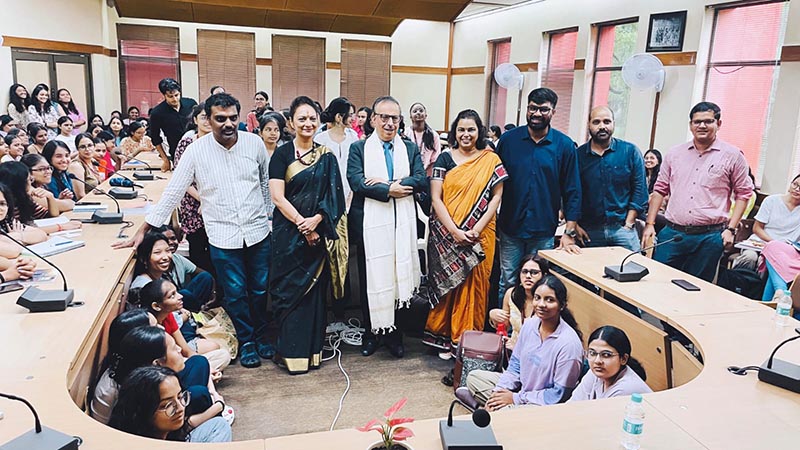
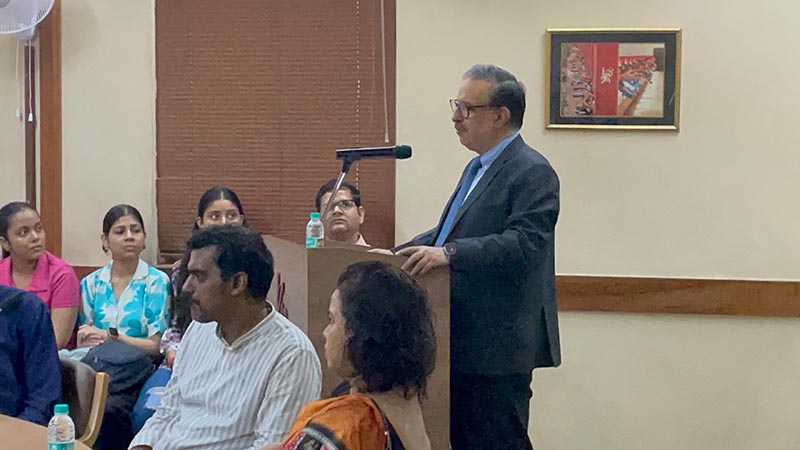
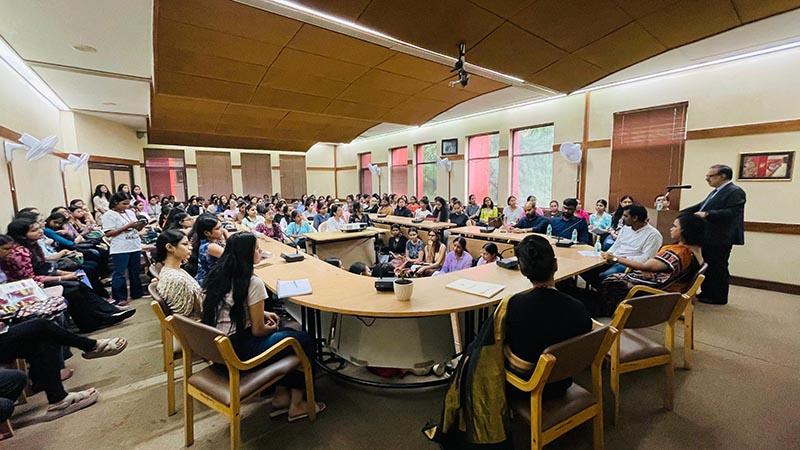
The Aung San Suu Kyi Centre for Peace successfully conducted an orientation program for the new students of the one-year diploma program on Conflict Transformation & Peace Building on 14th August 2025. During the orientation, the Director of the program and Acting Principal of the college, Prof. Kanika Ahuja, and the keynote speaker, Prof. Amitabh Mattoo, Dean and Professor at the School of International Studies, Jawaharlal Nehru University, addressed the students. Prof. Mattoo spoke to the students on “ The Changing Nature of Conflicts in the 21st Century”. Thereafter, the core faculty of the course, Dr. Priya Kumari, Dr. Leslie, and Dr. Nancy briefed the students about the course structure and requirements. This year , 26 students have been selected for the course through a rigorous screening process.