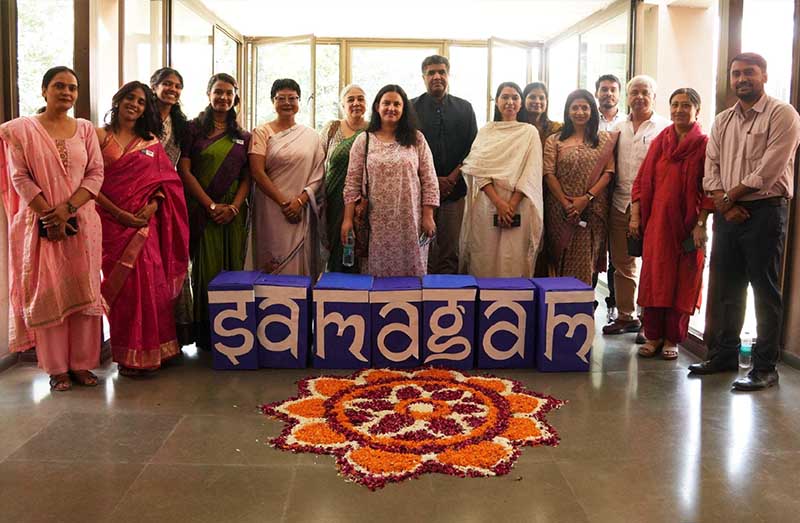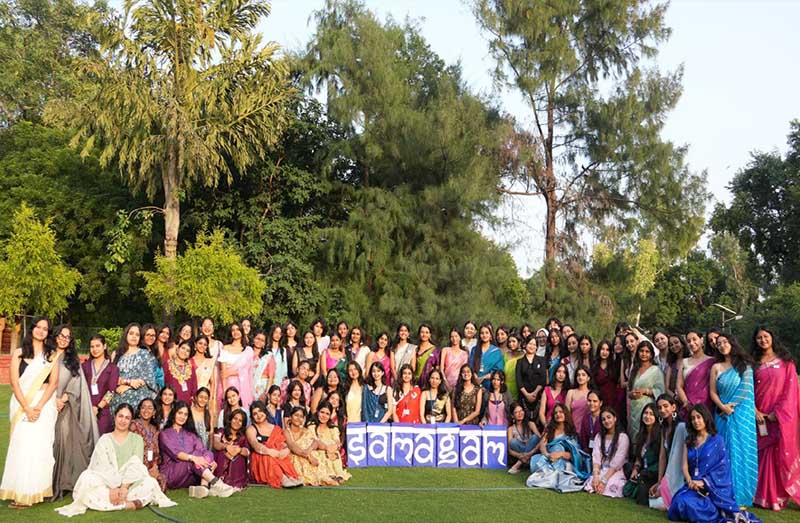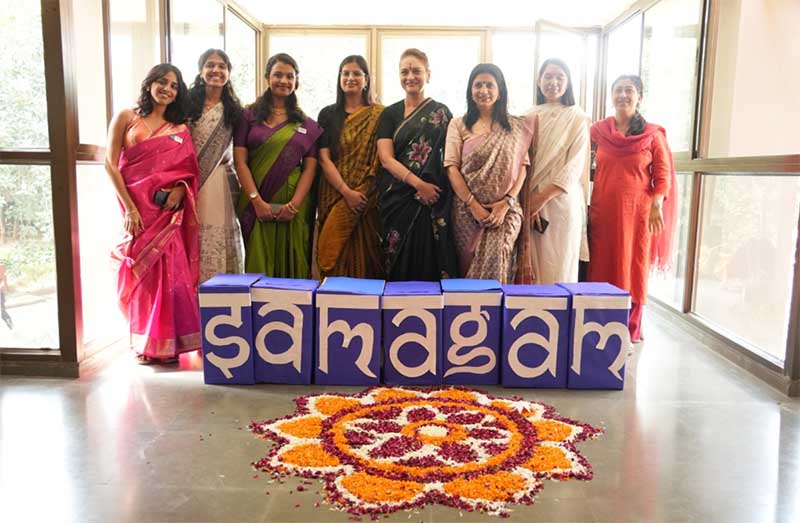
The B.A. Programme, Lady Shri Ram College for Women, hosted its annual academic meet, Samagam 2026–27, on October 1, 2026 centred around the theme “Sambhavna: The Architecture of Possibilities.” Bringing together discussions, competitions, presentations and interactive exhibitions, the event explored how possibilities emerge through ideas, choices,
failures and imagination.
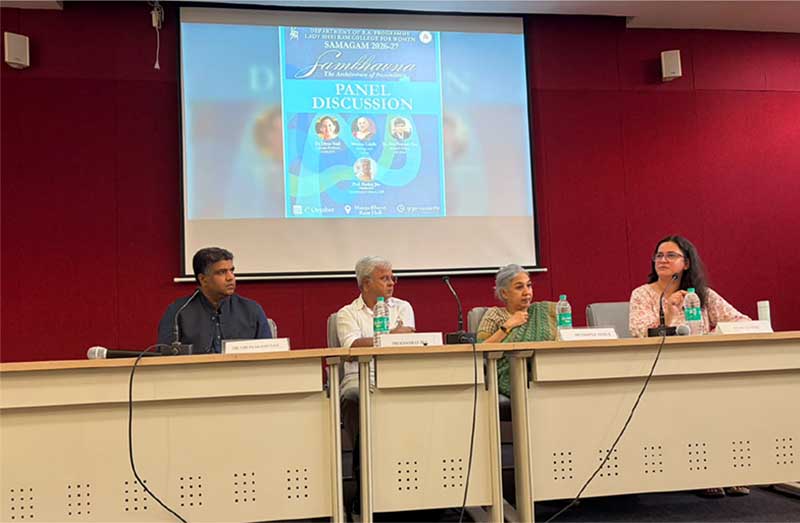
The day began at 9:30 a.m. at the Manju Bharat Ram Hall with the opening ceremony, followed by a panel discussion titled, “Beyond the Inherited Worlds: Memory, Mobility, and Belonging”. The panel brought together Dr. Divya Vaid, Assistant Professor at CSSS, JNU; Swapna Liddle, historian and author of Chandani Chowk: The Mughal City of Old Delhi ; Dr Om Prakash Das, Research Fellow at MP-IDSA. Professor Pankaj Jha from the Department of History, LSR, moderated the discussion. The speakers approached the theme through different disciplinary perspectives, discussing social mobility and gender aspirations, the role of information and media in shaping perceptions of South Asia, and the construction of historical memory. The discussion also examined failure, migration, education, Partition and the changing ways in which histories are remembered and represented.
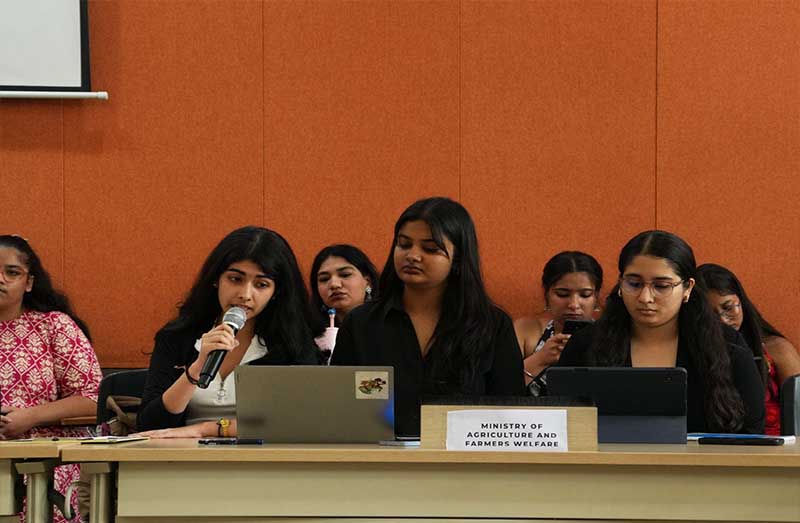
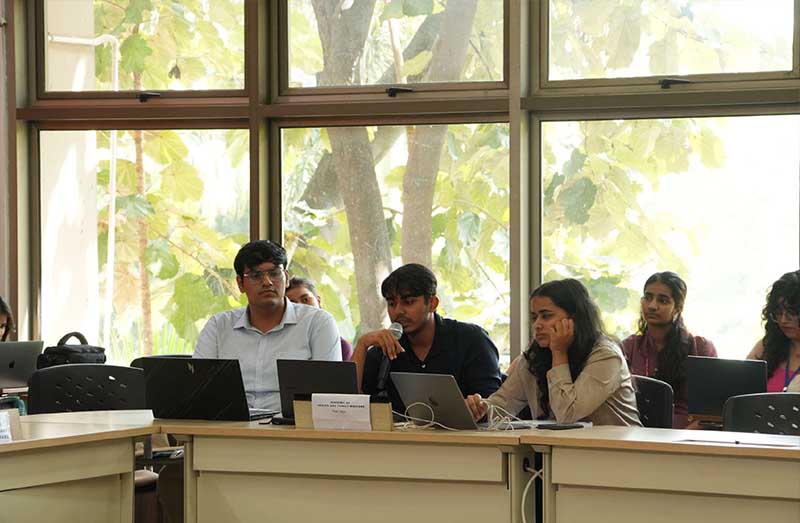
The academic discussions continued through the day with three competitions. Mandate: The Policy Competition, which garnered more than 200 registrations, was held at the New Conference Hall from 12:00 p.m. to 1:00 p.m., and brought together eight teams representing different ministries. Participants responded to interconnected national challenges and proposed policy interventions, which were subsequently tested through rebuttals and questions from the judges, Mr Hari K. Sharma and Dr Shrawan Kumar Pandey.
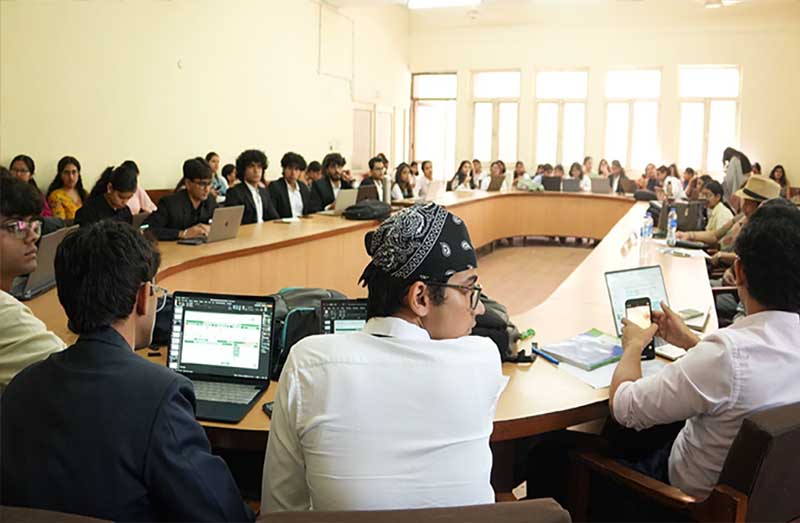
The Academic Paper Presentation Competition, with 189 registrations, was held at the New Conference Hall from 1:30 p.m to 4:00 p.m. It featured ten teams presenting research on diverse themes including demographic transitions, international migration, the Indian Constitution, artificial intelligence, the future of work, eating disorders and the Insolvency and Bankruptcy Code. Each presentation was followed by a question-and-answer session with the judges, Dr Sentisungla Longchar and Dr Sridhi Dash, encouraging participants to engage with their research beyond the prepared presentations.
Parallelly, the Revive the Failed: Case Competition, with more than 1400 registrations, was held at the Upper Seminar Room, and challenged eleven teams to develop revival strategies for failed Indian startups. Working with businesses across sectors such as quick commerce, agritech, dairy delivery and fashion, participants examined the reasons behind their failure and proposed strategies involving funding, marketing, operations and expansion. Their proposals were further scrutinised during the question-and-answer rounds by judges Dr Dhiren K Sahoo and Dr Pooja
Verma.
Alongside the competitions, Exhibition Hall 2 hosted the Annual Book Exchange Programme by the Books, Films & Heritage team and Beyond the Blueprints, an interactive exhibition organised by Me For You in collaboration with the Books, Films & Heritage team. The exhibition invited visitors to reflect on emotions, failures, memories and changing interpretations of heritage through interactive boards, installations and a free book-exchange programme.
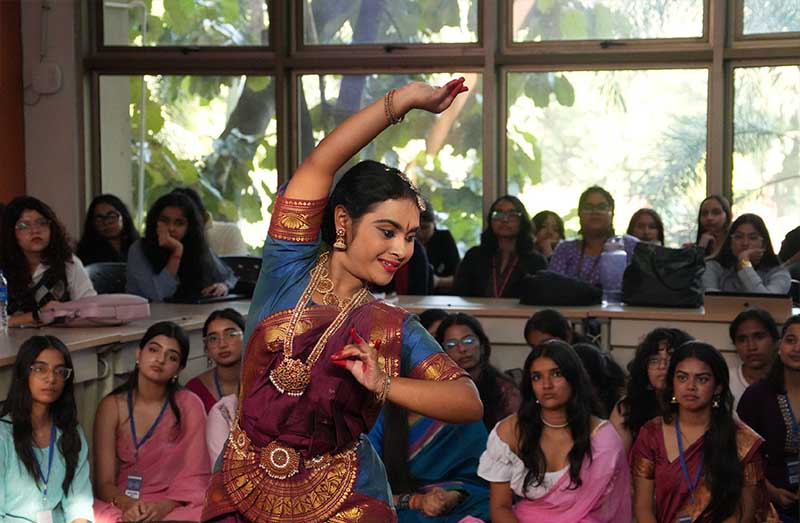
The day concluded with the closing ceremony at 4 p.m. at the New Conference Hall. Following musical and dance performances, the Editorial Board recapped the day’s events before felicitating the winners.Media and Publicity team screened a short film capturing various moments through the day.The ceremony concluded with a vote of thanks by the B.A. Programme Union.