



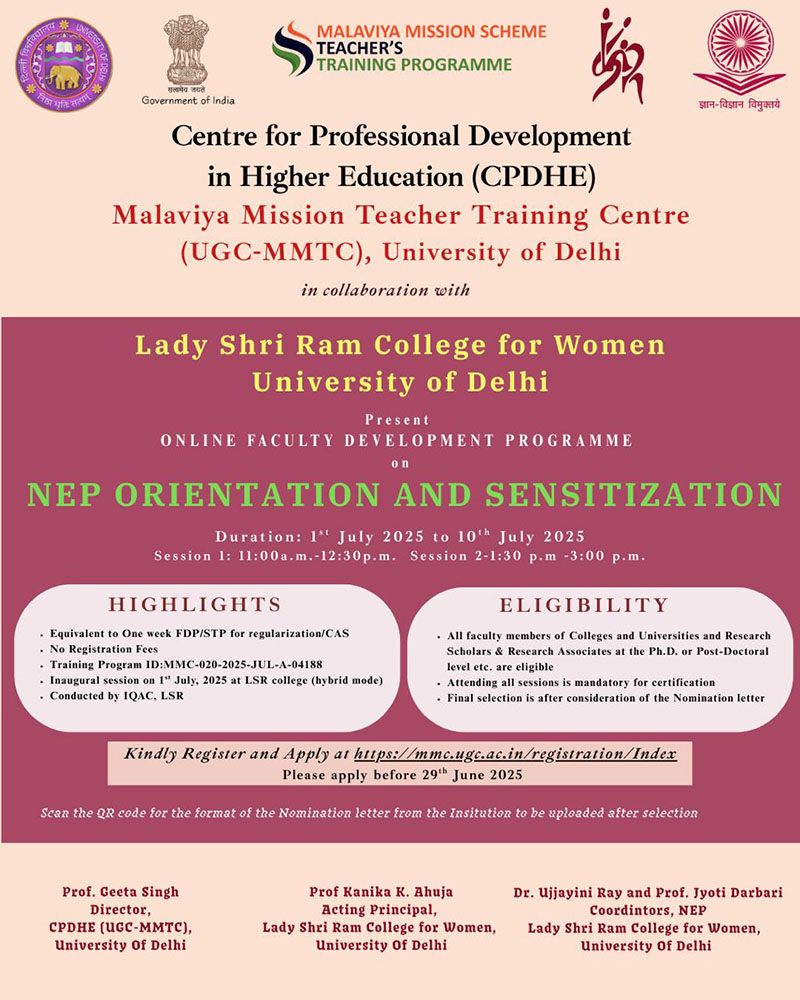
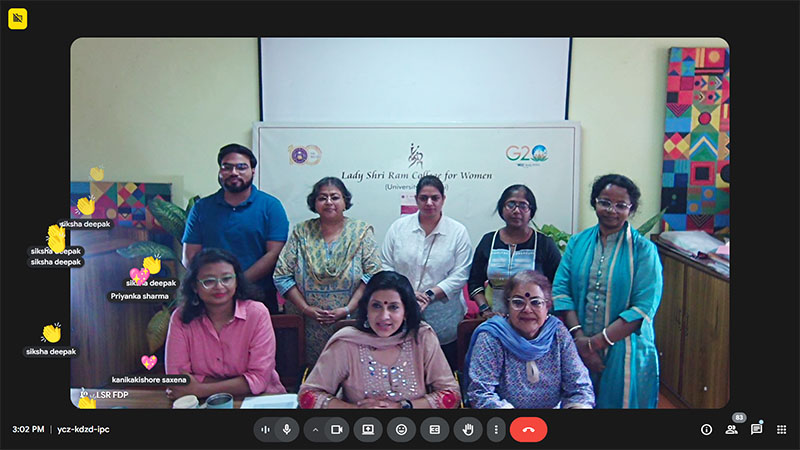
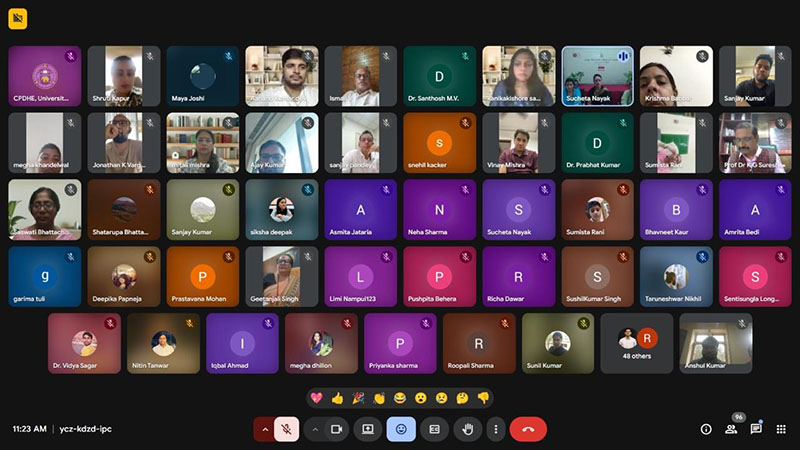
The College conducted an Online Faculty Development Programme on NEP Orientation & Sensitization (July 1-10, 2025), in collaboration with MMTTC – CPDHE. Dr Ujjayini Ray and Prof Jyoti Darbari, the course coordinators alongwith members of the NEP committee organized the program which was a huge success with more than 100 participants. Prof Geeta Singh, Prof KG Suresh and Prof Kanika Ahuja addressed the inaugural session. Sixteen extensive sessions were held with eminent speakers like Prof. Raj Nehru, Dr. Meenakshi Gopinath, Prof. Krishna Menon, Prof. Divya Upadhaya Joshi, Prof. Roopinder Obeori, Prof. Bhagwati Prakash Sharma, Prof. A.K. Bakshi, Prof. Hem Chand Jain, Dr. Nityananda Agasti, Prof. Nazir Ahmad Nazir, Prof. Namrata Sharma, Prof. Rishi Pal, Prof. P.B. Sharma, on the key themes of NEP 2020. The speakers and participants engaged on significant topics such as Indian Knowledge Systems, Vision of NEP 2020 and its contribution towards a Vikshit Bharat, the importance of building a sustainable ecosystem of higher education in India with research, innovation and industry collaborations, the growing importance of a skill-oriented and industry ready graduates, the commitment to ensure inclusive education with mechanisms like multiple entry exit options, accreditation of various skill courses, academic bank of credit etc.
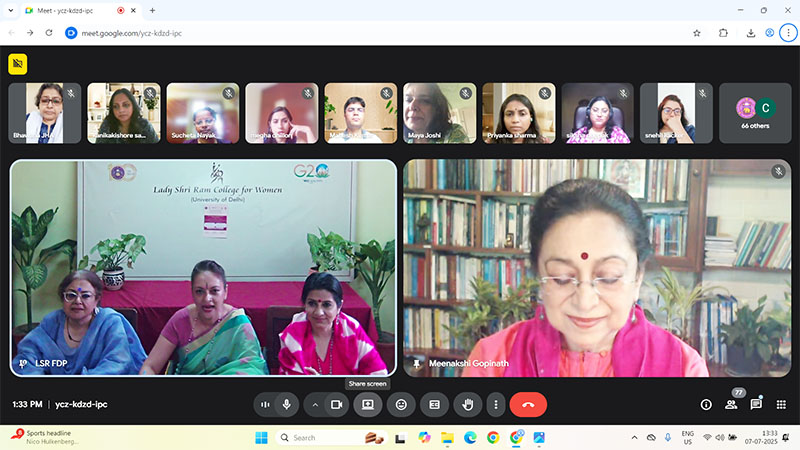
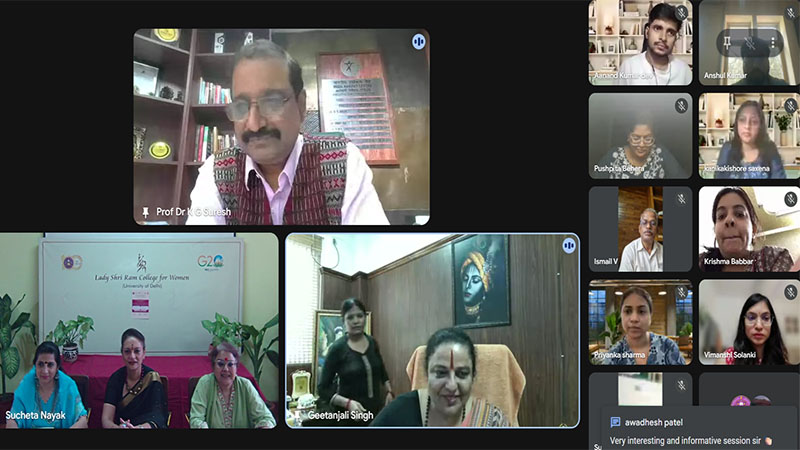
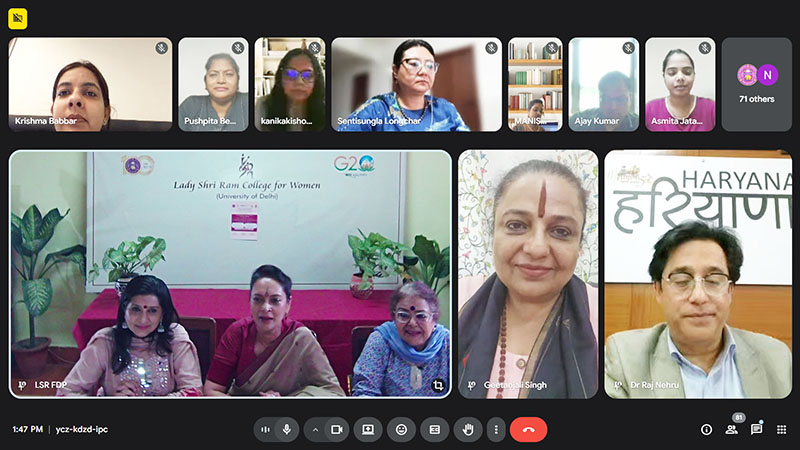
In the 8 day deliberations, challenges were discussed in terms of classroom teaching with regard to inclusion of people from a diverse range of social and ethnic backgrounds, linguistic, regional, and caste diversity, sexual orientation, and physical and intellectual ability. In this context, speakers emphasized the significance of pedagogy—its meaning, relevance, and role in shaping effective teaching practices and addressing the cognitive, emotional, behavioural, physical, social, political, and cultural well-being of every student. At the level of praxis, speakers also offered deeply reflective accounts of academic leadership, emphasizing ethical responsibility, emotional intelligence, and institutional care, by invoking the basic principle of knowledge as liberating, to emphasize each educator’s role as a leader in the classroom.
The FDP at LSR received an extremely positive feedback from the participants, speakers and CPDHE. The participants in their feedback acknowledged that NEP 2020 represents holistic education and encourages us to reconnect with India’s rich cultural heritage while embracing modern approaches to social innovation. They feel motivated towards being the facilitators for this transformation.