Report on: LITMUS’26 International Academic Conference “Translating Crisis:
Identity, Translation and Future of Humanities” 29 -30 January 2026,
Department of English, Lady Shri Ram College for Women, University of Delhi
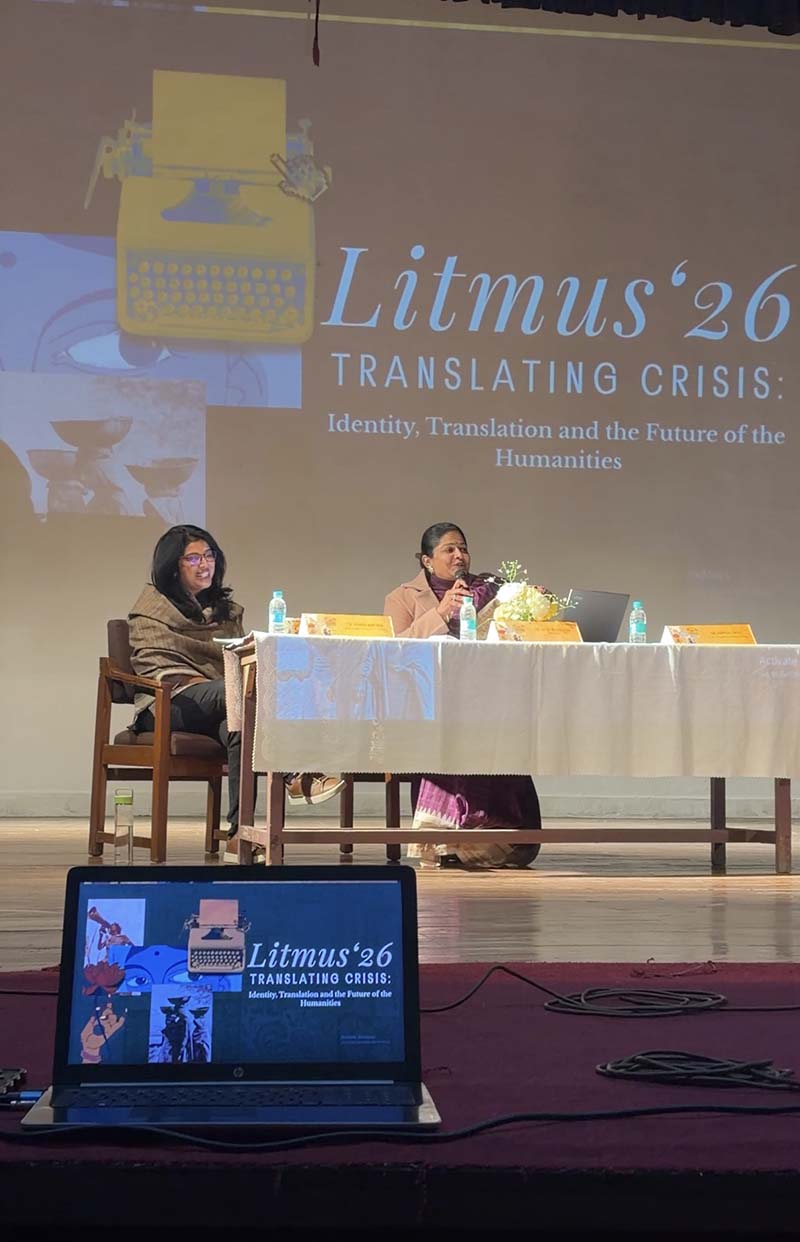
The Department of English, Lady Shri Ram College for Women, organised a two-day international academic conference titled “Translating Crisis” on the 29th and 30th of January 2026. The conference foregrounded literature and translation as critical practices through which contemporary political, ecological, social, and cultural crises may be interpreted, negotiated, and reimagined. Conceived as a multidisciplinary academic forum, the event brought together scholars, translators, writers, publishers, and students from across institutions to reflect on questions of language, power, identity, and representation. In the lead-up to the conference, the Department organised several Pre-LITMUS initiatives, including a Paper Presentation Competition facilitated by Jabberwock, the Department’s academic journal. The conference was held under the guidance of the Staff Advisors, Dr Maya Joshi and Dr Sridhi Dash.
The opening ceremony featured a Kathak performance by Ms.Lawanya, Artistic Director of Nridhya, set to “Ithlati” from Mann Bheetar (2020), a collection by Pt. Birju Maharaj. Choreographed by Pt. Jai Kishan Maharaj ji, the performance drew on monsoon imagery to evoke movement, devotion, and grace through rhythm, gesture, and narrative.
The intellectual framework of the conference was shaped by two keynote addresses. The inaugural keynote was delivered by Prof. Sukrita Paul Kumar, acclaimed poet and Editor of Indian Literature, the journal of the Sahitya Akademi. A recipient of the Rabindranath Tagore Literary Prize for Salt and Pepper: Selected Poems, she has also served as Director of a UNESCO project on The Culture of Peace and edited Mapping Memories, a collection of Urdu short stories from India and Pakistan. The second keynote address was delivered by Prof. Rita Kothari, Professor of English and Co-Director of the Ashoka Centre for Translation at Ashoka University, a Vani Distinguished Translator and recipient of the Fulbright and Rockefeller Fellowships. Her book Translating India: The Cultural Politics of English remains a foundational text in translation studies.
The conference featured a series of panel discussions engaging with translation across literary, technological, ecological, and publishing contexts. The panel on Translation included Prof. Arunava Sinha, noted translator, Head of the Department of Creative Writing at Ashoka University, and Co-Director of the Ashoka Centre for Translation, and Prof. B. Mangalam, Associate Professor of English at Aryabhatta College, University of Delhi, whose work focuses on Indian Writing in Translation and Dalit literature.
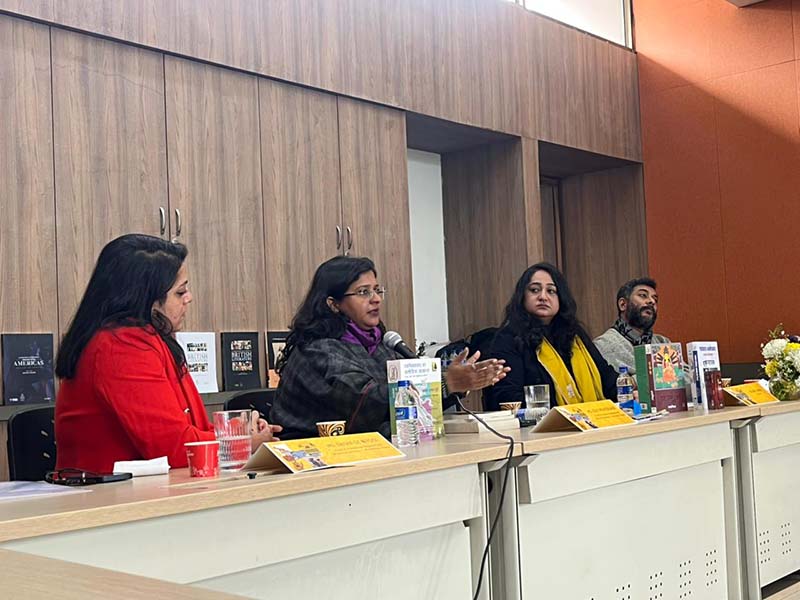
The panel on Publishing Regional and Minority Literature brought together Ms Aditi Maheshwari, CEO of Vani Prakashan, and Ms Trisha Niyogi, Director and COO of Niyogi Books, who reflected on questions of visibility, market imperatives, and ethical responsibility in publishing marginalised voices. The panel titled Who Speaks? Human, Mind, Machine featured Prof. Rukmini Bhaya Nair, PhD (Cambridge), Global Professorial Fellow at Queen Mary University of London and Professor Emerita at IIT Delhi, alongside Dr Vinayak Das Gupta, Associate Professor of English at Shiv Nadar University, engaging critically with authorship, cognition, and technology.
On the second day, the panel Translating Planet in Crisis featured Dr Sumana Roy, Associate Professor of Creative Writing and English at Ashoka University, and Dr Ragini Kapoor, Assistant Professor of English at Kamala Nehru College, University of Delhi, examining literary responses to ecological devastation and environmental injustice. The panel Whose Voice Counts? Identity in Literature included Ms Shehnab Sahin, author of Colour My Grave Purple and recipient of the “Icon of North East India” award, and Dr Veio Pou, writer and scholar and recipient of the Gordon Graham Prize for Naga Literature, foregrounding questions of caste, gender, ethnicity, and marginalisation.
The concluding session had panelists Dr Swatie, Assistant Professor in the Department of English and Cultural Studies, Panjab University, Chandigarh, and Dr Mohini Gupta, writer and literary translator with a DPhil from the University of Oxford in Asian and Middle Eastern Studies, return to the central concerns of translation, mediation, and cultural politics, bringing the conference to a reflective close.
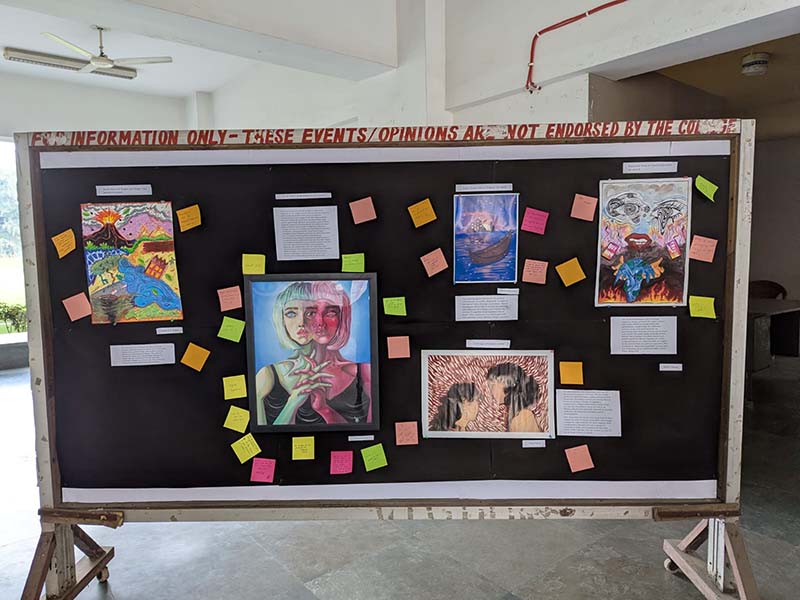
Student engagement formed a vital component of the conference. Four competitions were organised over the two days, including Intercollege Academic Poster competition, Turncoat Debate , Intra-college Blackout Poetry, which also witnessed enthusiastic participation from students from across various disciplines. A Paper Presentation Competition titled “Translating Crisis: Literature, Language, and the Politics of Mediation” was held as a part of the international conference which attracted participants from various institutions such as Nalanda University, Aligarh Muslim University,Hansraj College, Miranda House, Satyawati College. Taabeer, the Art and Discussion Club of the Department of English, in collaboration with Hive, the Fine Arts Society, also curated an art exhibition across both days, creating a visual dialogue with the conference theme.
The conference concluded with a live performance by Band Humsafar, a Delhi-NCR based ensemble known for its multilingual repertoire across Bengali, Urdu, Hindi, and Rajasthani. The performance underscored the conference’s inclusive ethos and reaffirmed art and performance as vital sites of translation and cultural memory.