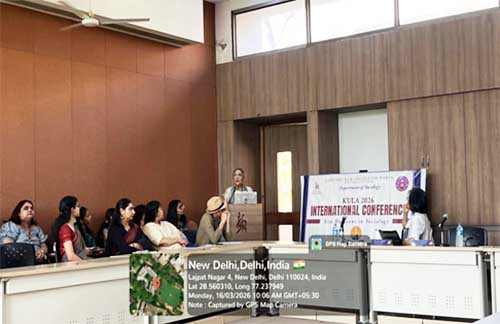
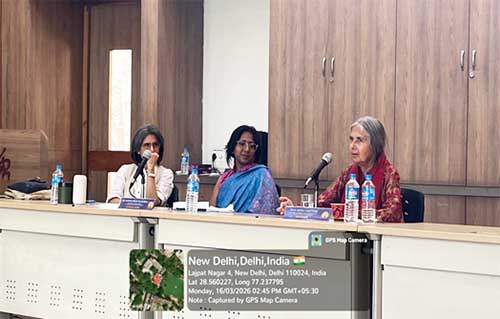
The Department of Sociology has successfully held its annual academic meet KULA 2026; A two-day International Conference, New Horizons in Sociology on 16-17 March 2026. The conference featured a wide range of academic engagements including Speaker Sessions, Undergraduate Research paper and Poster presentations, Exhibition, Intercollege Quiz and Policy Drafting competitions and Film screening and student lead discussion. Through a diverse set of themes like; 1) Gender, Space and the “Everyday”, 2) Body, Health and Social Construction, 3) Visual Culture, Media and Knowledge, 4) State, Power, Resistance, Inequalities, Social and Public Policies, 5) Social and Economic life under Digital Condition: Digitality, Platforms and the Economy, the conference attempted to explore new horizons in sociology and critical issues of contemporary time.
The Conference aimed to bring undergraduate students of sociology from LSRCW, colleges of Delhi University and other parts of India to engage, discuss and debate on important social issues and problems of contemporary relevance. The other aim was to provide a platform for the final year undergraduate research students to share their research output with their peers. The two-day conference was attended by more than 130 Students and all faculty each day.
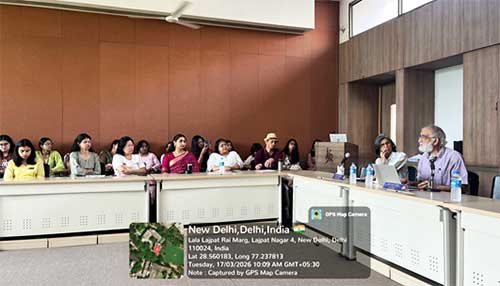
The Conference was inaugurated with a keynote address by Prof. Amrit Srinivasan, formerly professor of Sociology/Social Anthropology at the Department of Humanities and Social Sciences, IIT Delhi. Her address titled “The Genre of the Journey? Kula in the Kaliyuga” focused on rich tradition of fieldwork in sociology and social anthropology, its complex journey and its importance in contemporary times studying emerging social issues and problems.
Prof. Roma Chatterji’s(formerly Professor at Department of Sociology and currently visiting professor, School of Humanities and Social Sciences, Shiv Nadar University) lecture titled as “A Ramayana for The Kali Age: Superheroes, Science Fiction, and Myth” focused on recent retellings of Indian epics draw upon science fiction.
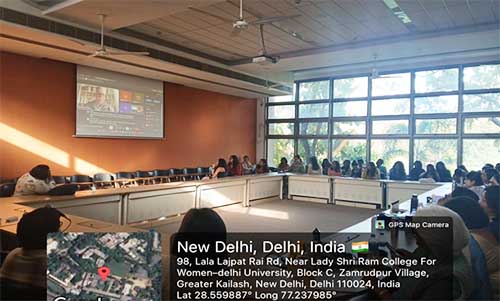
The online session by Prof. Christopher Pinney, a Visual Anthropologist at University College London titled as “The Photo State: Popular Photography and Visuality in India” focused on photography and visuality in rural India in 21st century. Among the topics he discussed are “demotic” as opposed to “vernacular” photography, photography and divination, photographic exorbitance and photography’s future orientation.
Prof. Dhruv Raina’s (formerly at the Zakir Husain Centre for Educational Studies, Jawaharlal Nehru University) lecture “New Directions in Sociology of Scientific Knowledge: The Spatial Turn” focused on the social character and social foundations of modern scientific knowledge and science and need for a new way to study science and technology in India. He traced the emergence of sociology of scientific knowledge through questioning dominant myths of objectivity and highlighted how sociological factors shape scientific knowledge.
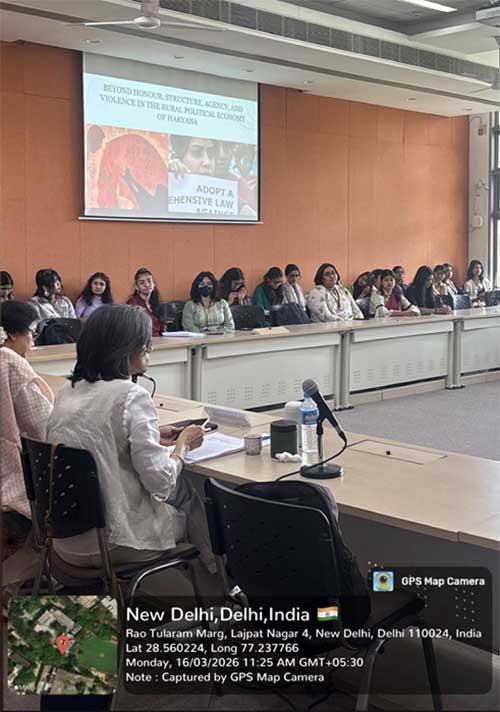
The central point of attraction of the conference was undergraduate research paper and poster presentation. More than 25 Posters and total 21 undergraduate research papers were successfully presented by students from more than 15 institutions of India covering wide range of themes under New Horizons in Sociology which included gender, visual culture, state, power, social policy and digitality.
Poster presentations were conducted in two sessions over the two-days in which students showcased their research work to the judges.
The two-day Exhibition titled “leisure” was a major point of attraction for the students and faculty of college. It was curated around its interrelated aspects space, time, and body to provide the viewers/readers a holistic understanding of sociology of leisure. The exhibition demonstrated the tactics through which space is re-authored, the temporal regimes that structure and the embodied dimensions focusing on its intentional and purposeful enactment.
An inter-college quiz competition titled “Ajab Quiz ki Ghazab Kahaani” was organised on the theme of Satire encompassing Culture, Humanities, Art, Music/Mythology and Pop culture. The competition included 45 participants from 20 different institutions. The Photography Competition was conducted on the theme ‘Leisure’. The competition featured 19 participants from 8 different institutions.
On the second day I.e. 17 March 2026 a Case Study Analysis Competition was successfully conducted. Participants were given a case study on the theme “Influencer Economy” with questions and a fixed time to analyse, identify key sociological dimensions, and present structured responses integrating theoretical perspectives with practical insights. There were 29 participants from 6 different institutions
The two-day event culminated with one of the most admired initiatives hosted by students wherein students from department actively participated and discussed a short film “Bulbul can sing” screened by Dastak, the Department Magazine.