


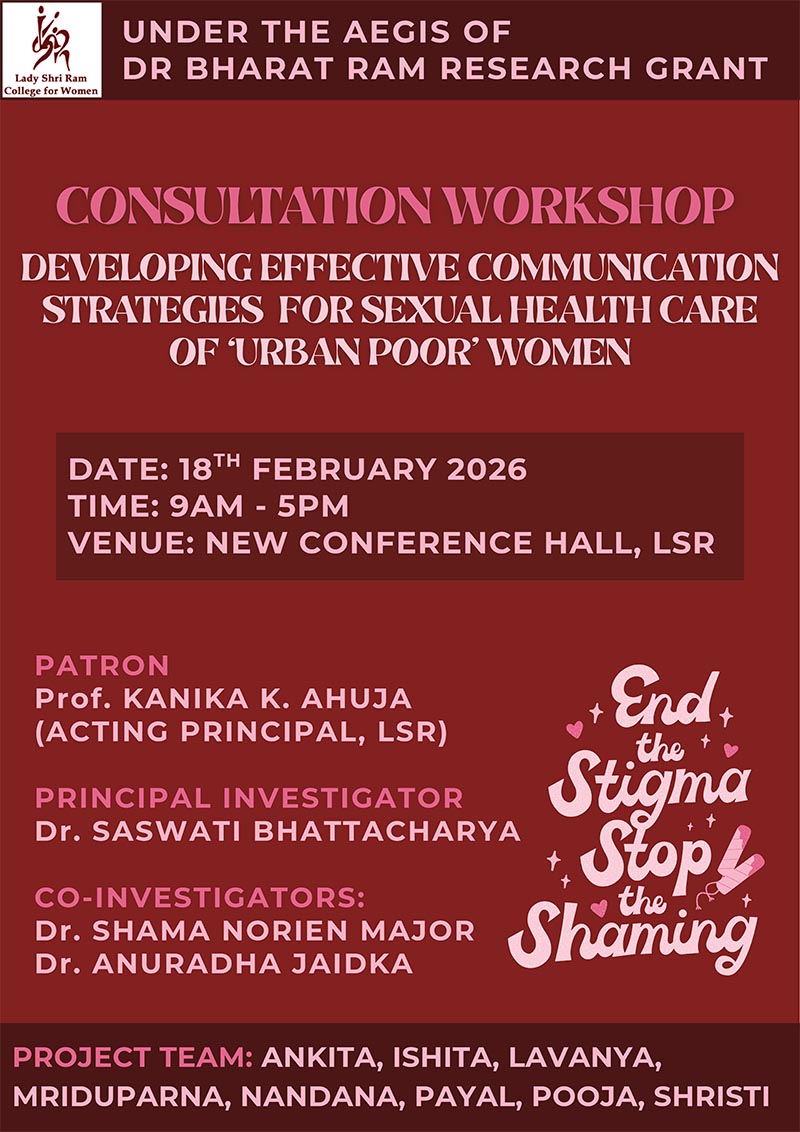
The research team of Dr. Saswati Bhattacharya (PI), Dr. Anuradha Jaidka (Co-PI), from the Department of Sociology and Dr. Shama Norien Major (Co-PI), Department of B.El.Ed along with student volunteers organised a consultation workshop titled Developing Effective Communication Strategies to Sexual Health Care of Urban Poor Women on February 18, 2026 as part of their ongoing research project “Young Women’s Sexual Health Requirements and perceptions of Healthcare professionals within the Public Healthcare System: an exploratory study in a Delhi Slum” under the aegis of Dr. Bharat Ram Research Grant R3.
The workshop was aimed to collectively consider the communication barriers that influence access to sexual and reproductive health services among urban poor women, and find practical strategies that could enhance inter-personal interaction, inter-generational interaction and finally encourage interaction with healthcare providers.
Almost 25 women respondents from Zamrudpur slum, the study area, joined the workshop and deliberated along with academic experts and practitioners. The first session focused on sharing key findings from the field, elaborating on the lack of knowledge and communication gap at inter-personal and inter-generational level among women within families. Next, Dr. Anugrah Milton from Rajkumari Amrit Kaur College of Nursing spoke on Understanding Sexual Health: My Changing Body. She explained the importance of remaining ‘informed’ and understanding bodily changes. This was followed by interactive discussions with Ms. Anisha Agarwal, Senior Director, Strategy and Development, from IDF, who engaged with questions about access to comprehensive contraceptive care and safe abortion services as a legal right, highlighting systemic and informational gaps faced by marginalised women. A presentation on the role of traditional and complementary medicine in sexual healthcare, particularly self-care by Dr. Tejaswini Dhiraj Buchade from the Department of Prasutitantra of All India Institute of Ayurveda followed, reinforcing the significance of culturally sensitive ways of understanding health.
The second session changed the theme to lived experiences and applied communication strategies. Mrs. Sarita Shokanda of Rajkumari Amrit Kaur College of Nursing shared observations regarding the interactions within the community, highlighting the challenges women encounter in open discussions on sexual health because of stigma, lack of understanding between the generations, and lack of trust in the medical and social care facilities. Developing on this, Ms. Simran Sanganeria of Sehmat Collective led a discussion involving active participant engagement on how to overcome the barrier of generational and social differences with the help of effective communication with the community. The session ended with Ms. Divya Gandhi Senior Specialist – Communications, IDF, talking about the significance of audio-visual communication tools in making information available and relatable to various audiences; she shared parameters of effective communication strategies with the research team.
The third session began with a deeper conversation between the research team and the participants led by Dr. Saswati Bhattacharya. Discussing the need for adequate information about sexual health, the dialogue progressed to involve talks around parental guidance, generational differences in approaches to sexual health, and the need for cultivating secure interpersonal spaces for such discussions.
Active participation from the women of Zamrudpur as well as the students enriched the deliberations, ensuring that the discussion remained grounded in quotidian experiences. The workshop was a significant addition to the pedagogic value of the research project, enabling the research team to visualise and think through communication approaches that are culturally responsive, participatory, and better aligned with the needs of urban poor women seeking sexual health care.