


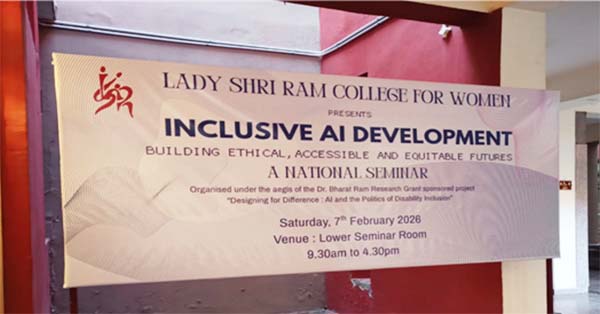
On February 7, 2026, Lady Shri Ram College organized a National Seminar titled “Inclusive AI Development: Building Ethical, Accessible, & Equitable Futures” under the aegis of the Dr. Bharat Ram Research Grant sponsored research project “Designing for Difference: AI and the Politics of Disability Inclusion.” The seminar featured an inaugural session, two panel discussions and student research poster presentations. The event saw panelists and guests from industry, academia, activists, and policy making circles from India and abroad. This national seminar saw student and faculty participation from several institutions including Jamia Millia Islamia, Kirori Mal College, Dr BR Ambedkar University, IIT, Delhi, IIIT, Bengaluru and O.P. Jindal Global University.
The inaugural session commenced with welcome remarks by Dr. Leslie Keerthi Kumar SM, Assistant Professor, LSR who outlined the objectives of the seminar and emphasised the urgency of embedding inclusivity and ethics into AI development. Dr. Mahesh S. Panicker, Associate Professor, LSR gave brief remarks about the progress of the research project and highlighted its key findings so far. The Keynote Address by Mr. K. Vikram Simha Rao, Former Director, Ministry of Social Justice & Empowerment, GOI focused on policy perspectives, discussing India’s evolving AI governance frameworks, disability rights regimes, and the importance of policy coordination to ensure equitable digital access. Ms. Vidhi Sharma, Head of Responsible AI, Future Shifts Lab offered special remarks on future-facing research and advocacy, stressing participatory design, intersectionality, and the need for collaboration between technologists, policymakers, and civil society.
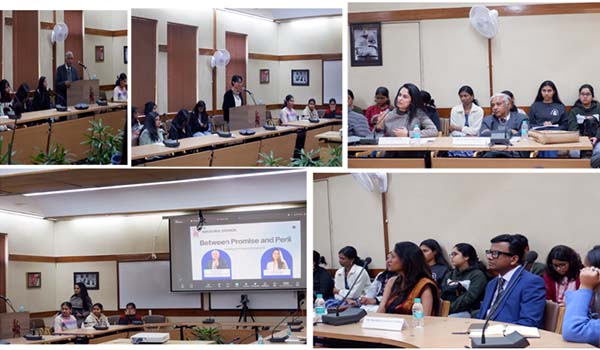
Session 1 (Nothing About Us Without Us: AI, Accessibility, and Disability) foregrounded lived experiences and inclusive design principles in AI systems. Ms. Aditi Shah, Principal Applied Scientist, Microsoft, US discussed accessibility-driven innovation in global tech ecosystems, with examples of her own life to highlight the importance of responsible AI practices. Mr. Prashant Ranjan Verma, General Secretary, National Association of Blind highlighted challenges faced by people with disabilities, particularly algorithmic bias and inaccessible digital infrastructures, while also highlighting the opportunities opened up by AI. Ms. Aprajita Verma, Frontend Architect, Mycom addressed frontend and UX considerations, underscoring how accessibility standards can be meaningfully integrated into everyday software development. Moderated by Dr. Mahesh S. Panicker, the discussion reinforced the principle of co-creation and participatory technology design.
Session 2 (Thinking Machines, Thinking Minds: Student Explorations in AI) saw students present research posters exploring ethical AI, accessibility tools, bias mitigation, and assistive technologies. The session encouraged interdisciplinary engagement and showcased emerging student scholarship on inclusive AI practices. Faculty and participants interacted with presenters, offering feedback and critical insights.
Session 3 (Smart Classrooms, Fair Futures: AI and Inclusive Education) examined AI’s role in transforming education. Prof. Sujit Kumar Chakrabarti, IIIT Bengaluru discussed adaptive learning systems and institutional readiness for AI integration. Dr. Anupama J., Project Scientist, IIT Delhi reflected on AI research applications in educational technologies, while Dr. Krishna Deo Singh Chauhan, O.P. Jindal Global University provided legal and ethical perspectives on data privacy and algorithmic accountability in education. Ms. Anushna Jha, Founder, Developed Learning Foundation shared grassroots insights on using AI tools to bridge learning gaps in underserved communities. Moderated by Dr. Leslie Keerthi Kumar SM, the session highlighted the need for equitable, transparent, and learner-centred AI adoption in education.
The Valedictory Session included the distribution of certificates to student poster presenters. Dr. Mahesh S. Panicker delivered the closing remarks, summarising key discussions and reiterating the seminar’s commitment to inclusive futures. Dr. Leslie Keerthi Kumar SM concluded the seminar with a vote of thanks, acknowledging speakers, organisers, and participants. A special note of gratitude was expressed to Prof. Kanika Ahuja, Acting Principal, LSR, whose unwavering support was critical for the successful organizing of the seminar.
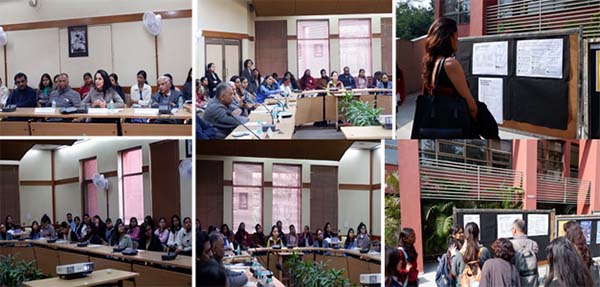
The national seminar successfully facilitated critical dialogue on inclusive AI development, bridging policy, technology, education, and lived experiences of disability. Through expert panels and student research, the event underscored the ethical responsibility of designing AI systems that are accessible, participatory, and socially just. The seminar reinforced Lady Shri Ram College for Women’s commitment to interdisciplinary research and inclusive innovation